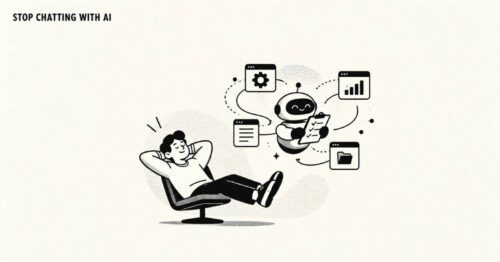
For the last few years, we’ve been treating AI like a digital Swiss Army knife. You go to a chat box, ask a question, and get an answer. It was a one-to-one relationship: One Human $\rightarrow$ One Model $\rightarrow$ One Output.
But as we hit the second quarter of 2026, the paradigm has shifted. The era of the “isolated assistant” is over. We have entered the era of Agent Orchestration.
If 2023-2025 was about the intelligence of the model, 2026 is about the coordination of the system.
From "Chatbots" to "Digital Departments"
Most of us are used to “single-agent” workflows. You ask an AI to write an email, and it does. But in a real business, an email is rarely the end goal. The goal is usually a closed deal, a resolved ticket, or a launched product.
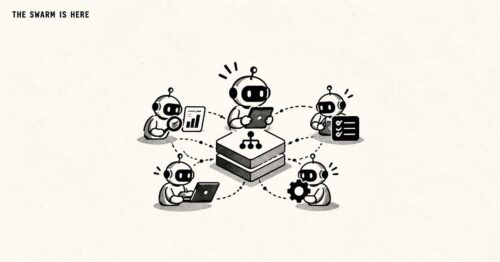
Agent Orchestration is the technology that allows multiple specialized AI agents to work together as a cohesive team. Instead of one generalist model trying to do everything (and occasionally hallucinating the details), orchestration creates a “Hive Mind” of specialists:
The Strategist Agent: Analyses the goal and breaks it into a project plan.
The Researcher Agent: Scours the web and internal databases for real-time data.
The Creative Agent: Drafts the content based on the research.
The Auditor Agent: Checks the draft for brand voice, legal compliance, and factual accuracy.
The Executor Agent: Sends the email, updates the CRM, and schedules the follow-up.
They don’t just run in a sequence; they collaborate. The Auditor might send the draft back to the Creative agent three times before it’s “good enough.” This is no longer a chat; it’s a digital department.
Why This Matters Right Now
Why is this trending in April 2026? Because the industry hit the “ROI Wall.”
Companies spent billions on LLM licenses, but they realized that talking to an AI isn’t the same as getting work done. The value isn’t in the conversation; it’s in the execution.
Orchestration solves the “Last Mile” problem of AI. It moves AI from a tool you use to a system that operates. We are seeing the rise of “Agentic Buyers”—systems that can not only research a product but actually negotiate the price and execute the purchase autonomously.
The New Competitive Edge: The "Orchestration Layer"
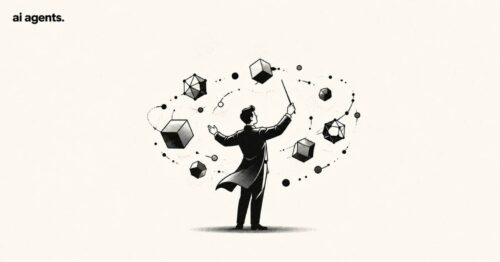
The real battle in 2026 isn’t between GPT, Claude, or Gemini. Those are just the “brains.” The real battle is over the Orchestration Layer—the software that decides which brain to use for which task and how they should communicate.
For businesses, the competitive advantage is no longer “Using AI,” but “How effectively can you orchestrate your AI workforce?”
The Bottom Line
We are moving from a world of Prompt Engineering (how to talk to the AI) to System Engineering (how to build the AI team).
If you are still treating AI as a search engine with a personality, you’re playing the 2023 game. The 2026 game is about building autonomous workflows that operate while you sleep.
The question isn’t “What can AI do?” but “What can my AI team achieve?”