Stay informed about

Technology

emetrio-offer-icon
Artificial Intelligence

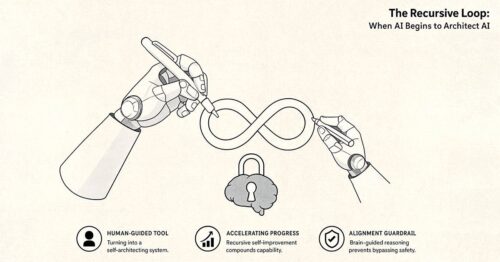
The Recursive Loop: When AI Begins to Architect AI

Artificial intelligence is transitioning from human guided training to recursive self improvement. We explore the mechanics of AI building AI, the risks of agentic misalignment, and the promise of brain guided reasoning.

Technology

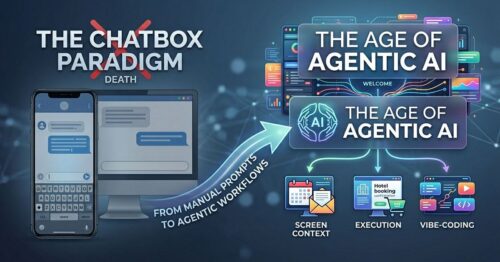
The Death of the Chatbox: Welcome to the Age of Agentic AI 🦅

For the last two years, we’ve been trapped in a “chatbox” paradigm. We type a prompt, we get a response, and we manually copy-paste that response into whatever tool we actually use to get work done. It was a novelty. Now, it’s a bottleneck. The recent moves from Google—integrating “Agentic

Technology

The Cyber-AI Arms Race: When Models Start Hacking Models

The era of the “script kiddie” is over. The era of the “Model-Driven Exploit” is here. For years, we’ve treated AI as a productivity tool, a way to summarize meetings or draft emails. But in May 2026, the mask slipped. Google recently intercepted a zero-day exploit targeting a web-based system

Technology

The Rise of Vibe Coding: From Syntax to Intent

For decades, the barrier to entry in software engineering was syntax. If you didn’t know where the semicolon went or how to manage a memory leak in C++, you weren’t a “coder.” You were a spectator. Then came the Copilots. They gave us autocomplete on steroids. We were still the

Technology

The Death of the Chatbot: Welcome to the Era of Agentic AI

For the last few years, we’ve been trained to “prompt.” We’ve treated AI like a hyper-intelligent encyclopaedia—a place to ask questions, summarize documents, and brainstorm ideas. We called them “chatbots.” That era is officially over. If 2025 was the year AI went mainstream, 2026 is the year it became operational.

Technology

From Solo Acts to Digital Symphonies: The Rise of Agent Orchestration

For the past couple of years, our relationship with AI has been largely a series of one-on-one conversations. We’ve treated LLMs like hyper-intelligent interns: we give a prompt, they give an answer. If the answer is wrong, we nudge them. If the task is complex, we break it into smaller

Get a Free Quote