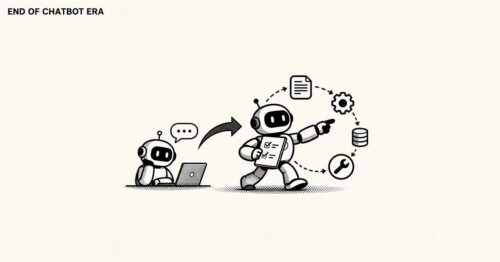
You are still treating AI like a fancy search engine. You type a prompt, you get an answer, and you spend twenty minutes cleaning up the hallucinated parts. But while you are playing prompt engineer, the biggest players in the world have stopped talking to single bots entirely.
They are building armies.
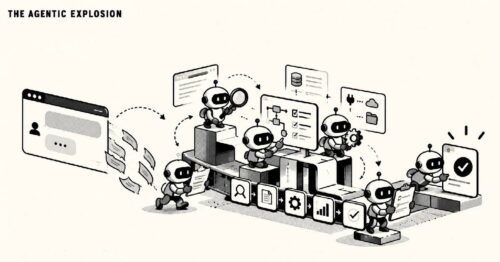
Imagine a world where you do not just ask an AI to write a business plan. Instead, you trigger a swarm of ten thousand specialized agents. One agent handles the market research, another audits the financial projections, a third plays the role of a skeptical investor, and a fourth coordinates the entire operation. They argue, they iterate, and they refine the work in a closed loop until the output is not just good, but bulletproof.
The Shift from Chatbots to Swarms
For the last few years, we have been obsessed with the size of the model. We wanted more parameters, bigger context windows, and smarter reasoning. But we hit a ceiling. A single model, no matter how large, is still just a statistical predictor. It can be wrong, and it cannot double check its own work without being told to do so.
Agent Swarms change the physics of the problem. Instead of one giant brain, you have a network of small, focused experts. This is called swarm intelligence. In nature, ants do not have a master plan, yet they build complex colonies. In AI, swarm intelligence allows us to break massive, complex problems into tiny, manageable tasks that are executed in parallel.
How Swarms Are Solving the Impossible
Look at the latest breakthroughs in biological data. We are seeing AI agent swarms uncovering new leads in genomic sequences that would take human researchers decades to find. They are not just analyzing data. They are hypothesizing, testing, and pivoting in real time.
Here is why this is a massive deal for you:
- Zero Latency Iteration: Swarms can run a thousand versions of a task and only present the winner.
- Built In Quality Control: You can designate specific agents as auditors. Their only job is to find mistakes in the work of other agents.
- Extreme Scalability: You can scale from ten agents to ten thousand without changing your core workflow.
How to Start Using Swarm Logic Today
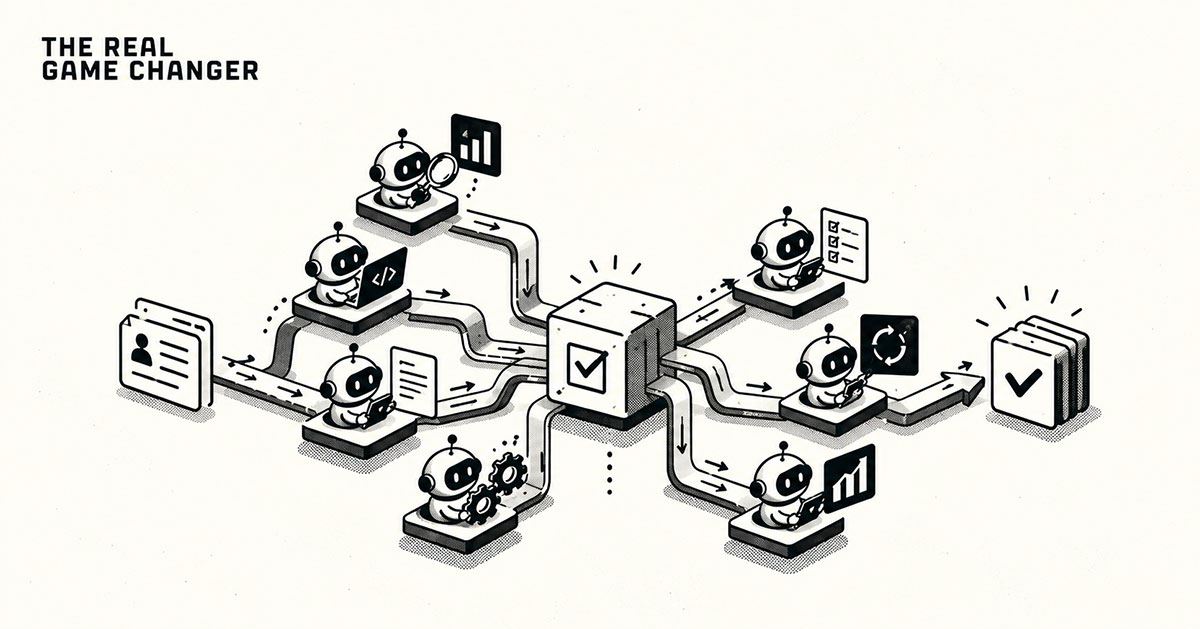
You do not need a supercomputer to start thinking in swarms. You can implement swarm logic using current tools by shifting your mindset from prompt to pipeline.
The Quick Win Strategy:
- Define the Roles: Do not ask one prompt to do everything. Create three distinct personas. The Creator, The Critic, and The Polisher.
- Build the Loop: Have the Creator produce a draft. Pass that draft to the Critic for a brutal teardown. Give the critique back to the Creator for a rewrite. Finally, let the Polisher handle the tone and formatting.
- Automate the Handoff: Use a tool like Make or Zapier to move the output of one AI call into the input of the next.
The Danger of the Single Point of Failure
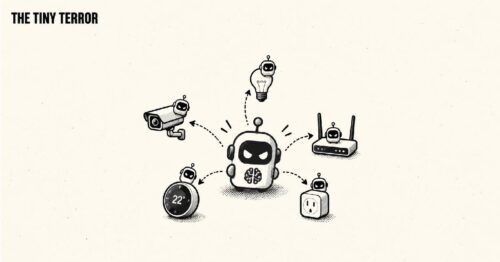
The biggest risk in AI today is over reliance on a single model. If that model has a bias or a specific blind spot, your entire project inherits that flaw. Swarms mitigate this by introducing diversity. You can use GPT 4o for the creative work, Claude 3.5 for the coding, and a local Llama model for the data scrubbing.
By diversifying your agent pool, you create a system of checks and balances. This is how you move from AI as a toy to AI as a reliable piece of infrastructure.
The Bottom Line
The era of the prompt is ending. The era of the orchestrator is beginning. The winners of the next decade will not be the people who know how to talk to AI, but the people who know how to manage AI organizations.
Stop trying to find the perfect prompt. Start building your swarm.
Want to see how to build your first agent swarm? Drop a comment below or share this post with your team to start the conversation.