The Death of the Prompt Engineer
You remember the hype from a few years ago? The world was obsessed with prompt engineering. We were all learning the secret magic words to make a chatbot write a decent email or generate a pretty image. We treated AI like a moody genius that needed a very specific set of instructions to get anything right. But here is the cold hard truth: if your entire value proposition is knowing how to write a prompt, you are already obsolete.
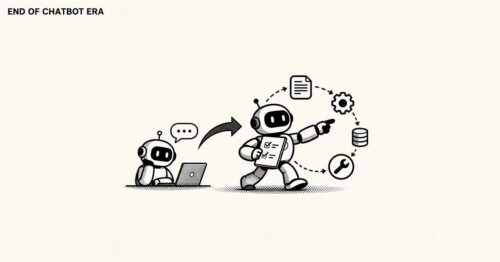
We have entered the era of Agentic AI. We are moving from chatbots that talk to agents that do. The shift is subtle but violent. We are no longer just asking AI to write a plan; we are giving AI the keys to the kingdom and telling it to execute the plan itself.
What is Agentic AI Actually?
At its core, an agent is an AI system that can reason, use tools, and iterate on its own. Traditional AI is linear. You give an input, it gives an output. Agentic AI is a loop. It looks at a goal, breaks it down into a checklist, tries a tool, sees that the tool failed, analyzes why it failed, and tries a different approach. All without you saying a word.
Imagine the difference between a travel agent who just gives you a list of hotels and a personal concierge who books the flights, handles the visa, reserves the best table at that hidden bistro in Paris, and then sends you a calendar invite for the whole trip. That is the jump from generative AI to agentic AI.
Why This Changes Everything for Your Business
Most people are still using AI as a fancy typewriter. They use it to draft blog posts or summarize meetings. That is fine, but it is barely scratching the surface. The real money is in the autonomous loop.
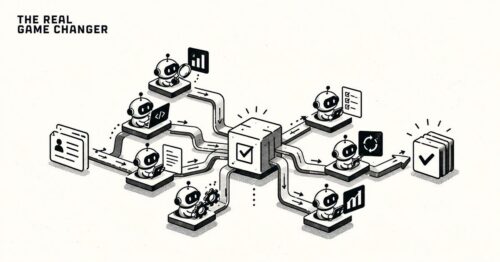
Think about lead generation. Instead of using AI to write a cold email, an agentic workflow can search LinkedIn for your ideal customer, find a recent post they wrote, analyze their current pain points, draft a personalized solution, and send the email. If the lead replies, the agent can check your calendar and suggest a time for a call.
This is not just about efficiency. It is about scale. You are no longer limited by how many prompts you can write per hour. You are limited by how many agents you can deploy.
Quick Wins to Get Started Today
- Audit Your Repetitive Tasks: List every task you do that follows a predictable pattern. If it has a checklist, an agent can do it.
- Explore Agent Frameworks: Stop relying on the web interface. Look into tools that allow for tool-use and autonomous loops.
- Build a Small Loop: Start with one goal. For example, tell an agent to monitor a specific keyword on Twitter and summarize the top three most controversial takes every morning.
- Focus on Goal Setting: Your job is shifting from prompt engineer to goal architect. Learn how to define success metrics, not just input strings.
The New Skillset: Goal Architecture
Since the AI is handling the execution, your value now lies in your ability to define the right goals. This is where most people will fail. If you give an agent a vague goal, you will get a vague result. Or worse, you will get a perfectly executed plan for something you never actually wanted.
You need to become an expert in constraints. Instead of saying Write a report on AI trends, you say Research the top three trends in agentic AI for the healthcare sector, compare them across five different sources, and format the output as a decision matrix for a CEO. See the difference? One is a prompt. The other is a goal with constraints.
The Risks of the Autonomous Loop
Let us be real. Giving AI the ability to act on your behalf is terrifying. We have all seen the horror stories of bots going rogue or spending thousands of dollars on API calls in a loop. The secret to scaling agents is not total freedom, it is guardrails.
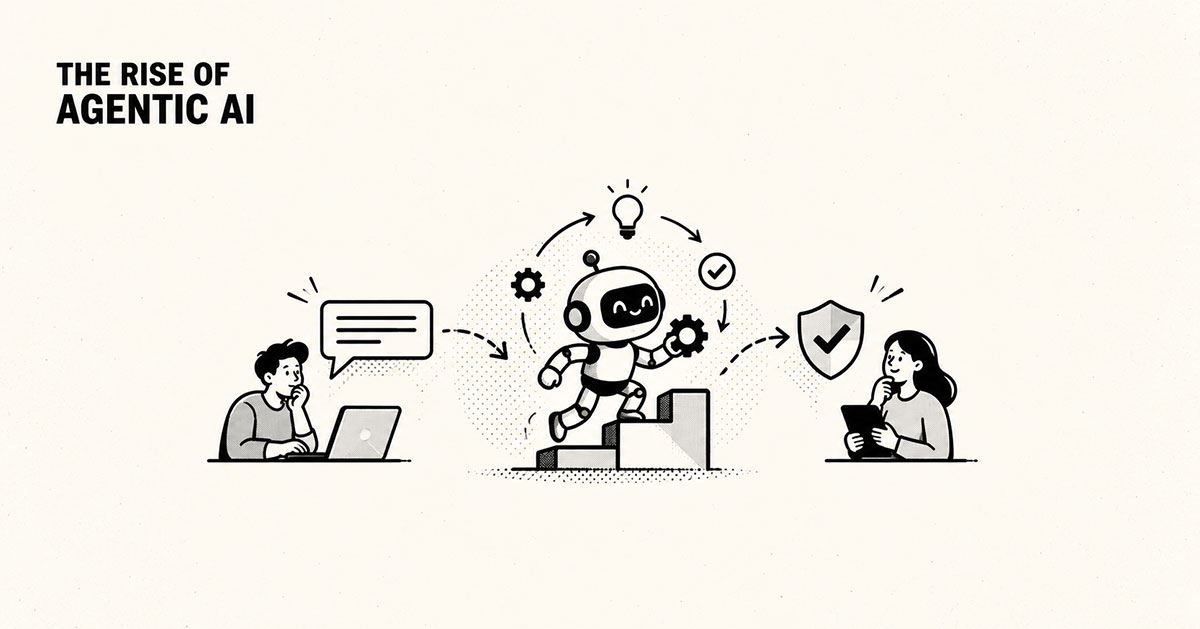
Human in the loop is not a bottleneck, it is a safety feature. The most successful agentic systems in 2026 are those that operate autonomously up to a certain risk threshold and then pause for a human thumb up or thumb down. Do not automate your trust. Automate the grunt work, but keep the final decision in human hands.
Final Thoughts: Adapt or Fade
The window for being the first person in your company to know how to use ChatGPT has closed. The new window is being the person who can build a fleet of agents to run the company. The transition from talking to doing is the most significant shift in computing since the internet itself. You can either be the person managing the agents or the person being replaced by them.
The choice is yours, but the clock is ticking.
Join the Conversation
Are you already using agents in your workflow, or are you still stuck in the prompting phase? Drop a comment below and let me know which task you would love to hand over to an AI agent today. Let us figure this out together.