For a long time, the “frontier” of Artificial Intelligence was a walled garden. If you wanted state-of-the-art reasoning, complex coding capabilities, or high-level agentic behavior, you had to pay a subscription to a handful of giant corporations and send your data to their clouds.
That wall just got a lot shorter.
The release of Gemma 4 by Google DeepMind isn’t just another model update; it’s a fundamental shift in the power dynamics of AI. By bringing frontier-level intelligence to an open-weight model under the Apache 2.0 license, Google has effectively “democratized” the high-end AI experience.
What Makes Gemma 4 Different?
Most “small” models are compromises. Usually, you trade intelligence for speed, or accuracy for a smaller memory footprint. Gemma 4 breaks this trade-off.
Built on the same research that powers the massive Gemini series, Gemma 4 is designed for advanced reasoning and agentic workflows. The most shocking part? It can run on hardware that was previously unthinkable for this level of performance—your laptop, your smartphone, or even a Raspberry Pi.
Imagine having a model that rivals the giants in logic and coding, but lives entirely on your local device. No latency, no monthly fees, and most importantly, total privacy.
Why This Matters for the Future
The implications of Gemma 4 extend far beyond just “a faster chatbot.” Here is how it changes the landscape:
The Rise of Local Agents
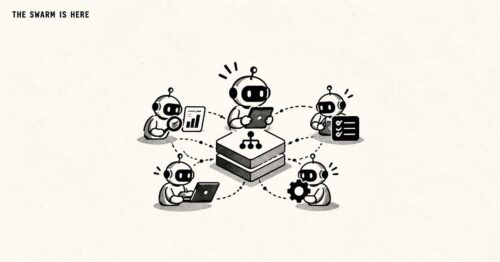
We are moving from “AI as a website” to “AI as an invisible layer” in our OS. With Gemma 4, developers can build autonomous agents that manage your files, organize your calendar, and automate your workflow locally, without your personal data ever leaving your device.
A Boom in Edge Computing
From smart home devices to industrial sensors, the “edge” is getting a brain. Gemma 4 allows complex decision-making to happen in real-time, on-site, without needing a constant internet connection to a central server.
Innovation Without Permission
Because Gemma 4 is open-weight and commercially permissive, the community can now fine-tune the model for hyper-specific tasks—medical research, legal analysis, or niche programming languages—without needing to ask a corporate entity for API access.
The Bottom Line
Gemma 4 represents the moment where “small” AI stopped being a compromise and started being a superpower. By putting frontier intelligence into the hands of every developer and hobbyist, Google hasn’t just released a model—they’ve ignited a new era of open-source innovation.
Whether you’re a developer looking to build the next big app or a user tired of cloud-dependency, the message is clear: The future of AI is local, open, and incredibly powerful.