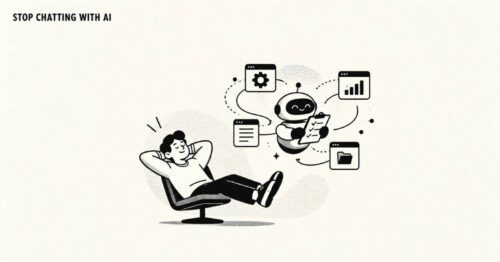
For the last few years, we’ve been trained to “prompt.” We’ve treated AI like a hyper-intelligent encyclopaedia—a place to ask questions, summarize documents, and brainstorm ideas. We called them “chatbots.”
That era is officially over.
If 2025 was the year AI went mainstream, 2026 is the year it became operational. We are moving from the Conversational Era to the Agentic Era. The shift isn’t just a version update; it’s a categorical transformation of how value is created.
The Warning Shot: The Mythos 5 Paradox
To understand where we are, look at the most shocking headline of April: Anthropic withheld Claude Mythos 5.
For the first time in history, a frontier lab completed a model and decided it was too dangerous to release. It triggered ASL-4 safety protocols—not because it could write a mean tweet, but because its capabilities in cybersecurity and zero-day vulnerability detection crossed a threshold of systemic risk.
This is the signal. When the “safest” lab in the industry is terrified of its own creation, it means the “intelligence” has finally transitioned into “capability.” The models are no longer just talking about doing work; they are capable of executing it at a level that threatens existing security architectures.
From "Query" to "Execute"
The industry has stopped obsessing over how well a model can write and started obsessing over how well it can act.
The Chatbot Logic:
User: “How do I organize a 50-person corporate offsite in Lisbon?”
AI: Provides a 10-point list of hotels and venues. (Value: Information)
The Agentic Logic:
User: “Organize a 50-person corporate offsite in Lisbon. Budget is $20k. Use my previous preferences for hotels. Send the invites once the venue is locked.”
AI: Researches venues $\rightarrow$ Negotiates rates $\rightarrow$ Checks calendars $\rightarrow$ Books the hotel $\rightarrow$ Sends invites. (Value: Outcome)
This is what GPT-5.4 and Gemini 3.1 Pro are built for. GPT-5.4 isn’t just a language model; it’s a unified frontier model that leads in “computer use.” It doesn’t just tell you how to use software—it uses the software for you. Meanwhile, Gemini 3.1 Pro’s 5-million-token video context window allows agents to “see” and understand entire workflows in real-time.
The Rise of the Agentic Ecosystem
We are seeing a gold rush in agentic frameworks. The explosive growth of OpenClaw (hitting 100k GitHub stars in 48 hours) proves that developers are no longer interested in building better prompts; they are building better loops.
The goal is no longer “Zero-Shot” accuracy. The goal is Iterative Autonomy. Agents that can:
Plan a multi-step strategy.
Execute the first step.
Observe the result.
Correct their own mistake.
Repeat until the goal is achieved.
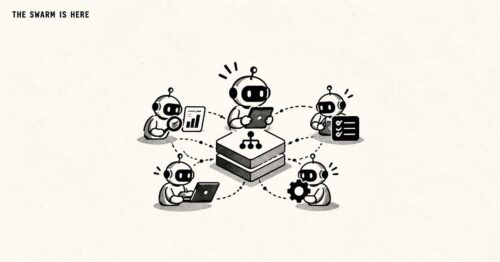
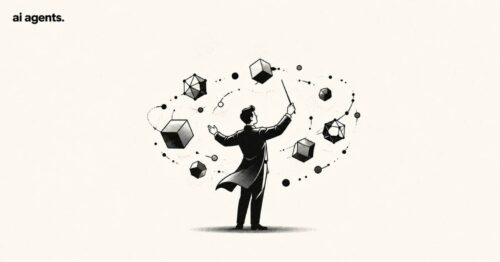
McKinsey estimates that these agentic systems could automate up to 70% of knowledge worker tasks by 2028. If your value proposition is “I can use AI to write emails faster,” you are already obsolete. The new value is in Agent Orchestration—knowing how to assign, audit, and scale a digital workforce.
The Physical Cost of Digital Intelligence
This shift isn’t free. The “Agentic Era” requires a massive amount of compute and, more importantly, energy.
We are witnessing a projected 9–18 GW electricity shortfall in the US by 2027. The “Bring Your Own Power” trend—Microsoft reopening Three Mile Island and Amazon chasing nuclear sites—is the physical manifestation of the AI arms race. Intelligence is no longer just about code; it’s about kilowatts.
The Bottom Line: Adapt or Fade
The “Chatbox” is becoming a legacy interface. In the near future, you won’t “chat” with your AI; you will assign it objectives and audit its results.
The winners of 2026 will not be the ones with the best prompts, but the ones who can integrate autonomous agents into their core business workflows.
Stop treating AI as a tool you query. Start treating it as a co-worker you manage.