For the past couple of years, our relationship with AI has been largely a series of one-on-one conversations. We’ve treated LLMs like hyper-intelligent interns: we give a prompt, they give an answer. If the answer is wrong, we nudge them. If the task is complex, we break it into smaller pieces and manually feed those pieces back into the machine.
But the “lonely agent” era is ending. We are entering the age of Agent Orchestration.
What is Agent Orchestration?
If a standard AI agent is a solo musician, Agent Orchestration is the conductor and the full orchestra.
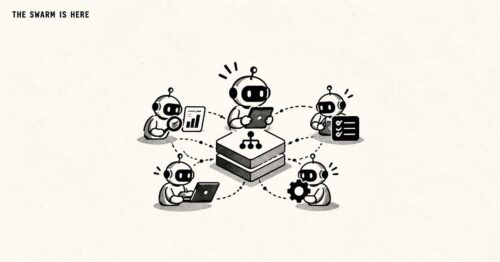
Instead of one general-purpose model trying to do everything, orchestration involves teams of specialized agents—each with a specific role, toolset, and set of constraints—working together to achieve a high-level goal.
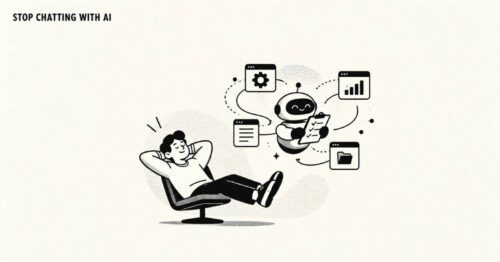
In this paradigm, you don’t just “chat” with an AI; you assign a mission to a digital department.
The Shift: From Prompting to Managing
We’re seeing this shift manifest in real-time. The recent introduction of “workspace agents” by industry leaders like OpenAI is a signal that the industry is moving away from the chat box and toward the workflow.
In an orchestrated system, the process usually looks like this:
The Planner/Manager: A high-level agent analyses your request, breaks it into a roadmap, and assigns tasks to specialized sub-agents.
The Specialists: One agent might be a “Researcher” (optimized for web searching and fact-checking), another a “Coder” (optimized for Python and API integration), and another a “Critic” (optimized for finding flaws and edge cases).
The Feedback Loop: Agents don’t just output a final result; they peer-review each other. The Critic sends the Coder’s work back for revisions before the Manager ever shows it to the human.
Why This Changes Everything
Why does this matter? Because “general intelligence” is often less useful than “coordinated expertise.”
Imagine you want to launch a new product. In the old way, you’d spend hours prompting a chatbot to help you brainstorm, then another prompt to write a marketing plan, then another to draft emails.
In an orchestrated world, you tell your AI team: “Research the top three competitors for a new eco-friendly coffee pod, draft a competitive analysis, create a 30-day launch calendar, and write the first five social media posts.”
Behind the scenes:
Agent A scrapes current market data.
Agent B analyses that data for gaps.
Agent C builds the calendar based on those gaps.
Agent D writes the copy to match the brand voice.
Agent E checks the dates for conflicts and ensures the tone is consistent.
You don’t see the chaos; you only see the completed project.
The Growing Pains: The "Hallucination Loop"
Of course, orchestration isn’t without its risks. One of the most fascinating (and terrifying) challenges is the hallucination loop. This happens when two agents agree on a piece of false information. Agent A makes a mistake; Agent B, trying to be helpful, assumes Agent A is correct and builds upon that error. Before the human sees the result, the “team” has collectively hallucinated an entire reality.
Solving this requires “adversarial” agents—specialists whose only job is to be sceptical and try to break the logic of their teammates.
The Future: Managing Digital Departments
As we move toward 2026 and beyond, the primary skill for humans will shift from prompt engineering to organizational design.
We will stop asking, “How do I write a prompt for this?” and start asking, “How should I structure my AI team to handle this project?” We will become managers of digital departments, overseeing a swarm of specialized intelligences that handle the grunt work of execution, leaving us to handle the high-level strategy and creative direction.
The symphony is starting. It’s time to pick up the baton.