Imagine waking up to find that your entire business operation is no longer a series of manual tasks, but a living, breathing organism of a billion tiny digital workers. This isn’t a sci-fi movie. It’s happening right now with the release of Google AX.
The Shift from Chatbots to Agent Fleets
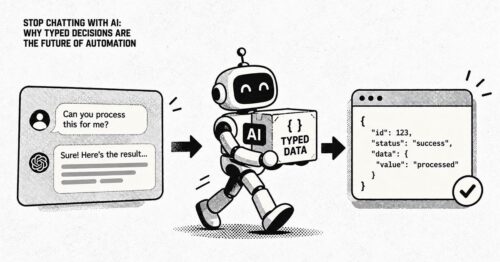
For the last few years, we have been obsessed with chatbots. You ask a question, it gives an answer. It’s a linear, one-to-one relationship. But the game just changed. We are moving into the era of agent orchestration. Google AX is not just another AI model. It is a declarative orchestrator designed to manage fleets of agents at a scale we have never seen before.
Think of it as the difference between hiring one very smart intern and owning a global logistics company with a billion specialized employees. AX allows you to define the desired state of your business and lets the AI figure out which agents to deploy, how to coordinate them, and how to scale them using Kubernetes. This is the leap from AI as a tool to AI as infrastructure.
Why This Matters for the Average Entrepreneur
You might be thinking, “I don’t run a Kubernetes cluster, so why should I care?” Here is the truth: the infrastructure layer is where the real power resides. When orchestration becomes this efficient, the cost of complex AI workflows drops to near zero. We are talking about autonomous research departments, real-time global sales teams, and hyper-personalized customer journeys that operate 24/7 without a single human clicking a button.
The competitive advantage is shifting. It is no longer about who has the best prompt. It is about who can orchestrate the most effective fleet of agents to solve a specific business problem.
Quick Wins for the Agent Era
If you want to stay ahead of this curve, start shifting your mindset today. Here are a few ways to prepare for the agentic shift:
- Map Your Workflows: Document every repetitive process in your business. If it can be mapped, it can be agentized.
- Think in Outcomes: Stop focusing on the “how” and start defining the “what.” Instead of “Write an email,” think “Increase lead conversion by 10 percent.”
- Clean Your Data: Agents are only as good as the information they access. Organize your internal docs and databases now.
- Experiment with Orchestration: Look into frameworks that allow for multi-agent collaboration. The move toward declarative AI is inevitable.
The Dark Side: Risks and Realities
Of course, running a billion agents is not without its perils. We are looking at a future where AI can accidentally create feedback loops or consume massive amounts of compute if not properly constrained. There is also the looming question of oversight. How do you manage a workforce that moves a million times faster than you do?
The answer is governance. The winners in the AX era will not be the ones who deploy the most agents, but the ones who build the best guardrails. You need a system of checks and balances to ensure your digital fleet is aligned with your brand values and business goals.
The Path Forward
The window for “early adoption” is closing fast. In a world where a billion agents can be spun up in seconds, the only thing that cannot be automated is genuine human strategy and creative vision. Your job is no longer to do the work, but to be the architect of the system that does the work.
Stop playing with AI like it is a toy. Start treating it like a workforce. The agent apocalypse is here, and it is the greatest opportunity for growth in the history of digital business.
Ready to build your first agent fleet? Drop a comment below with the one task you would automate today if you had a billion digital workers at your disposal. Let’s brainstorm the architecture together!