Imagine waking up and finding your entire Monday morning triage already done. Your emails are sorted, your calendar is optimized, three market research reports are sitting in your inbox, and your most urgent client has already received a personalized update. You didn’t wake up at 4 AM to do this. You didn’t even write a complex prompt. You simply gave a high level goal to your AI agent the night before.
We are officially exiting the era of the Chatbot. For the last few years, we have been trapped in a loop of prompt engineering, trying to find the magic words to make a LLM give us a decent result. But the game has changed. We are now entering the era of Agentic AI, where the focus shifts from prompting to orchestration.
The Death of the Prompt and the Rise of the Agent
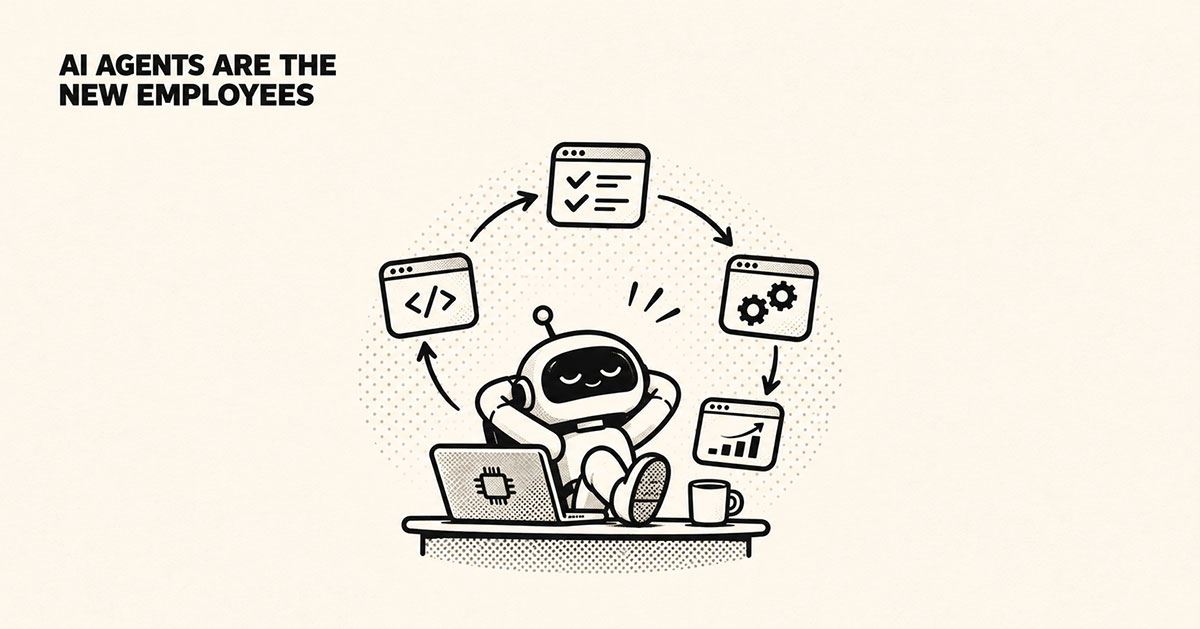
Most people still use AI like a fancy search engine. They ask a question, they get an answer, and then they manually move that answer into a document or an email. That is a waste of human intelligence. An AI Agent is fundamentally different because it possesses three critical capabilities: autonomy, tool use, and reasoning loops.
While a chatbot waits for you to tell it what to do next, an agent takes a goal and breaks it down into a series of tasks. It doesn’t just tell you how to find a lead on LinkedIn; it actually searches for the lead, verifies their current role, finds a common connection, and drafts a personalized outreach message based on their latest post.
Why You Should Care Right Now
The shift to agentic workflows is not just a technical upgrade. It is a business model shift. If you are a founder, a freelancer, or a corporate leader, the ability to deploy agents is the difference between scaling linearly (hiring more people) and scaling exponentially (deploying more compute).
Think about the repetitive parts of your day. The data entry, the scheduling, the initial research, the first draft of a report. These are no longer tasks for humans. They are tasks for agents. The new high value skill is not knowing how to write a prompt, but knowing how to design a workflow that an agent can execute without constant hand holding.
How to Build Your First Agentic Workflow
You don’t need a PhD in machine learning to start using agents. You just need to change how you think about the problem. Instead of asking for a result, design a process.
Step 1: Define the Goal
Be clear about the outcome. Instead of saying Write a blog post, say Research the top three trends in AI for November 2026, find supporting data from three reputable sources, and write a 1000 word deep dive in a casual tone.
Step 2: Identify the Tools
What does the agent need to access? Does it need a web browser? A Google Sheet? A CRM? A calendar? The more tools you give an agent, the more autonomous it becomes.
Step 3: Establish a Feedback Loop
The secret to a great agent is the critique loop. Tell your agent to write a draft, then tell it to act as a harsh editor and find five flaws in that draft, and then rewrite the post to fix those flaws. This internal loop is where the magic happens.
Quick Wins for Immediate Productivity
If you want to start today, try these three simple agentic setups:
- The Research Agent: Set up a workflow that monitors five specific RSS feeds, summarizes the key points every morning, and emails you a curated brief with a suggested action for each item.
- The Lead Gen Agent: Use an agent to scrape a specific industry directory, filter for companies that just raised a Series A, and find the CEO’s public contact info.
- The Content Repurposing Agent: Give an agent one long form YouTube transcript and ask it to create ten Twitter posts, two LinkedIn updates, and one newsletter blurb, all maintaining your specific brand voice.
The New Hierarchy of AI Skills
As we move deeper into 2026 and beyond, the market value of AI skills is shifting. Here is how the hierarchy looks now:
Level 1: The User
Can use ChatGPT or Claude to summarize a text or write a basic email. (Low value, everyone can do this).
Level 2: The Prompter
Understands system prompts, few shot prompting, and chain of thought. (Medium value, becoming automated by the models themselves).
Level 3: The Orchestrator
Can design multi agent systems, connect AI to external APIs, and build autonomous workflows that run in the background. (High value, this is where the money is).
The Future is Autonomous
We are moving toward a world where every professional has a fleet of digital employees. You will be the manager, not the doer. Your job will be to set the vision, define the constraints, and quality control the output. This sounds scary to some, but for those who embrace it, it is the ultimate liberation from the grind.
The tools are already here. The models are already capable. The only thing missing is your willingness to stop chatting and start orchestrating.
Ready to reclaim your time?
Stop spending your hours in a chat box. Start building your agent fleet today. If you found this helpful, share this post with a friend who is still stuck in the prompting loop or leave a comment below telling me which part of your business you would automate first!