Imagine waking up in a world where your genetic code is no longer a locked vault. For decades, DNA has been the ultimate biological enigma, a complex series of chemical signals that only a handful of the world’s most elite scientists could even begin to decode. But that just changed. We have officially entered the era of Genolator and AI wet labs, where artificial intelligence is not just analyzing data, but actually talking to your DNA.
The Moment the Code Cracked
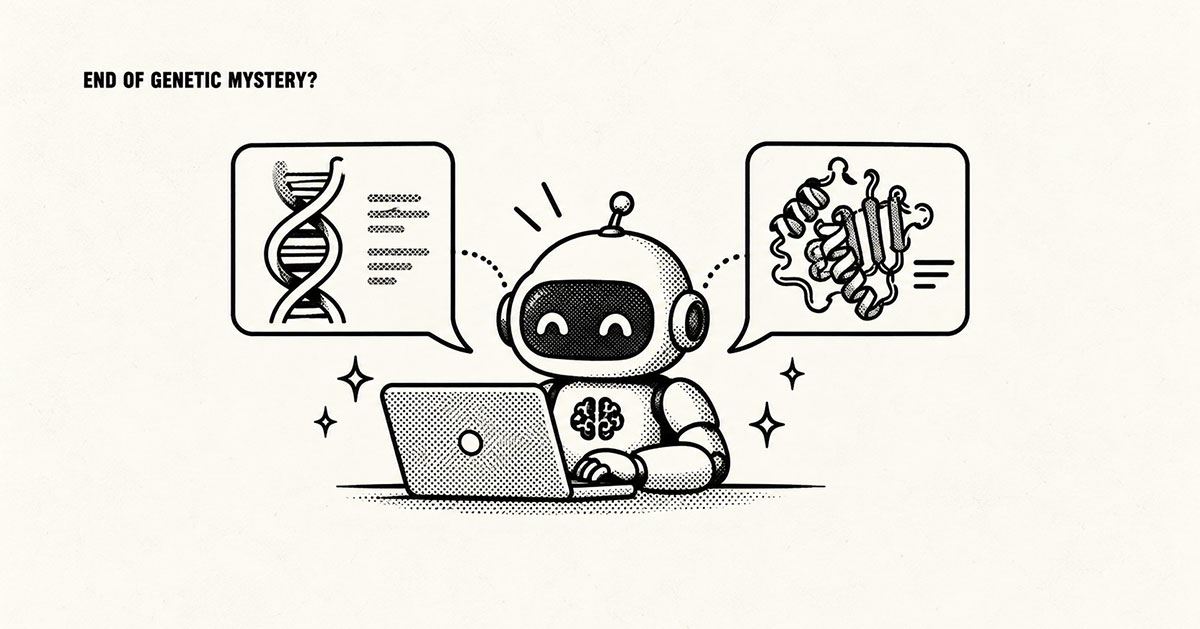
For a long time, AI was the assistant in the room. It helped scientists organize spreadsheets or predict how a protein might fold. That was AI as a calculator. What we are seeing right now with models like Genolator is AI as a translator. We are moving from prediction to conversation. AI can now take a sequence of proteins and translate them into plain English, telling us exactly what a specific genetic mutation is doing in real time.
This is not just a marginal improvement. This is a phase shift. When you can translate the language of life into a language humans can read, you remove the biggest bottleneck in medicine: the guesswork. We are moving toward a future where a doctor can look at your genetic sequence and read it like a manual for your specific body.
Wet Labs: Where Silicon Meets Carbon
The real game changer is the integration of AI with wet labs. Anthropic and other pioneers are no longer just running models on servers; they are running them in biology labs. They are using AI to design an enzyme, then physically creating that enzyme in a petri dish, testing it, and feeding the result back into the model.
This closed loop is accelerating discovery by orders of magnitude. Recently, AI discovered a new enzyme system with CRISPR like repeats in bacteriophage DNA. The crazy part? The AI found it before the humans even knew where to look. We are essentially giving AI a pair of hands to experiment with the physical world.
How This Actually Changes Your Life
You might be thinking that this is all just high level science for people in white coats. It is not. This technology is about to hit your daily life in three massive ways.
First, personalized medicine will stop being a buzzword. Instead of taking a drug that works for 60 percent of people, you will get a treatment designed for your specific protein expression. This means higher efficacy and almost zero side effects.
Second, we are looking at the end of hereditary blindness. By translating the exact “typo” in a person’s DNA and using AI to design the perfect molecular “eraser,” we can potentially fix genetic diseases before they even manifest.
Third, we are entering the age of synthetic biology. Imagine materials that grow themselves or bacteria that can eat plastic with 100 percent efficiency because an AI designed their metabolic pathway from scratch.
Quick Wins for the AI Curious
You do not need a PhD in genomics to stay ahead of this curve. Here is how you can start understanding the bio AI revolution today:
- Follow the research coming out of Anthropic’s biology initiatives and DeepMind’s AlphaFold updates.
- Explore the concept of “Proteomics” to understand how proteins differ from DNA.
- Keep an eye on “Genolator” and similar LLMs designed for biological sequences.
- Read up on the ethics of synthetic biology to understand the guardrails being built.
The Ethical Tightrope
Of course, with great power comes a massive amount of risk. When AI can design enzymes and talk to DNA, the line between “cure” and “weapon” becomes very thin. The ability to create a cure for a rare disease is the same ability required to create a targeted pathogen.
This is why the “wet lab” approach must be coupled with extreme transparency and international oversight. We cannot treat biological AI like a typical software release. There is no “undo” button for a synthetic organism released into the wild. The focus must remain on therapeutic breakthroughs while building digital and physical fences around the most dangerous capabilities.
The New Frontier of Human Potential
We are standing at the edge of the most significant discovery in human history. For the first time, we are not just observers of evolution; we are the authors. The transition from reading DNA to writing and translating it means that the constraints of our biology are becoming optional.
It is a wild time to be alive. Whether you are a developer, a healthcare worker, or just someone who likes tech, the intersection of AI and biology is where the next decade of wealth and health will be created.
What do you think? Is the idea of AI translating your DNA inspiring or terrifying? Let me know in the comments below. If you found this deep dive useful, share it with a friend who still thinks AI is just for writing emails. Follow for more updates on the frontier of intelligence.