The enterprise artificial intelligence landscape is undergoing a fundamental shift. For the past two years, organizations focused on generative AI tools capable of responding to user prompts with draft text, code, or creative assets. While impressive, these systems remained passive execution tools requiring constant human intervention. Today, we are stepping into the era of agentic workflows—where autonomous AI agents operate with goal-driven intelligence, self-reflection, and tool-use capabilities to solve complex, multi-step business challenges independently.
Understanding the Evolution: From Assistance to Agency
Traditional business process automation relied on rigid, rule-based Robotic Process Automation (RPA). If an anomaly occurred, the process broke. Conversational AI improved accessibility but lacked execution capacity. Autonomous AI agents bridge this critical gap by combining large language models (LLMs) with memory systems, planning algorithms, and external software APIs.
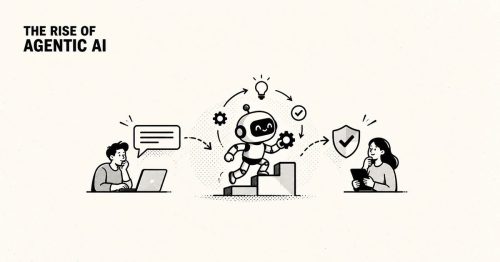
An AI agent does not simply generate text; it analyzes a complex objective, breaks it down into sequential sub-tasks, evaluates intermediate results, adjusts its strategy dynamically, and executes actions directly within business software systems. This transition from passive response to proactive agency marks a monumental milestone in digital transformation.
The Power of Multi-Agent Systems in Orchestrating Workflow
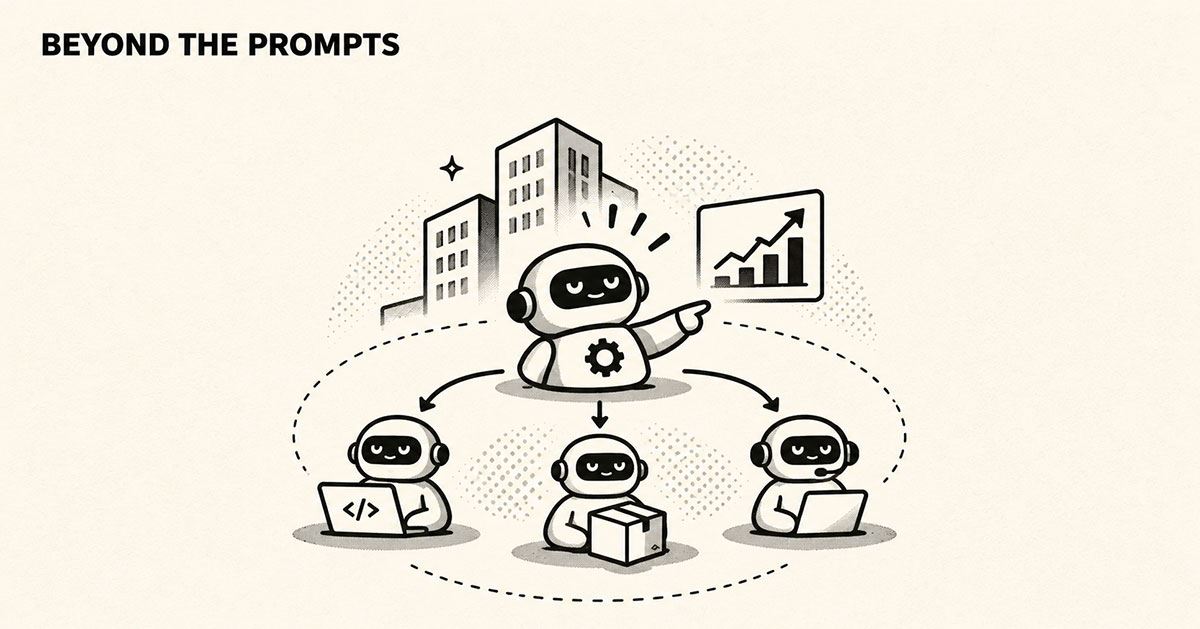
While single autonomous agents handle localized tasks, the true scale of enterprise innovation lies in multi-agent collaboration systems. In these digital ecosystems, specialized agents are designed to handle specific roles, operating much like a cross-functional human team.
- Orchestrator Agents: Deconstruct high-level corporate directives into granular operational workflows.
- Execution Agents: Interact directly with ERPs, CRMs, databases, and third-party APIs to gather data or run operations.
- Validation & Quality Control Agents: Audit outputs against compliance standards, data security protocols, and operational parameters before finalizing tasks.
This division of labor minimizes hallucinations, increases execution speeds, and allows businesses to scale operational bandwidth without linearly expanding headcount.
Practical Business Applications Across Key Functions
Forward-thinking organizations are already deploying intelligent agent architectures across critical operational functions:
- Automated Software Lifecycle Management: AI agents write code, run automated tests, detect security vulnerabilities, and submit pull requests with minimal developer oversight.
- Intelligent Supply Chain Logistics: Autonomous agents continuously analyze real-time shipment delays, weather forecasts, and vendor prices, automatically rerouting inventory or renegotiating orders.
- Hyper-Personalized Customer Experience: Agents autonomously resolve complex customer inquiries by verifying user context, processing backend refunds, and triggering personalized follow-ups.
Navigating the Path to Agentic Deployment
Integrating autonomous agency into legacy infrastructure requires careful architectural design. Business leaders must focus on building secure sandbox environments, implementing clear human-in-the-loop oversight frameworks, and establishing precise programmatic guardrails to maintain operational sovereignty.
Embracing the Agentic Future
The rise of autonomous AI agents marks a definitive evolutionary step in corporate productivity. Organizations that move beyond basic prompt engineering toward building robust, agent-driven ecosystems will achieve unprecedented agility, precision, and operational scale. The future of enterprise technology belongs to those who empower intelligent systems to execute actionable outcomes today.