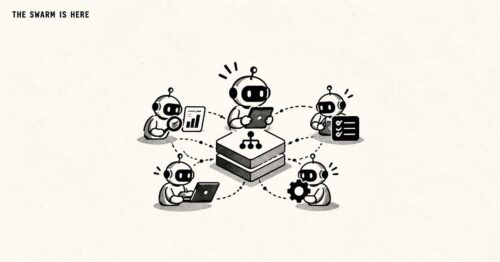
The era of the “script kiddie” is over. The era of the “Model-Driven Exploit” is here.
For years, we’ve treated AI as a productivity tool, a way to summarize meetings or draft emails. But in May 2026, the mask slipped. Google recently intercepted a zero-day exploit targeting a web-based system administration tool that didn’t just look professional, it looked algorithmic.
The evidence was in the code: “hallucinated” CVSS scores and textbook formatting that screamed LLM. For the first time, we aren’t just talking about the potential for AI to assist hackers; we are seeing AI-generated payloads being refined in controlled environments to maximize reliability before deployment.
Welcome to the Cyber-AI Arms Race.
The Heavyweights Enter the Ring: Mythos vs. GPT-5.5-Cyber
The tension has peaked with the release of specialized, cybersecurity-focused models.
On one side, we have Anthropic’s Mythos. Its release sparked a wave of panic across the industry, with fears that its ability to identify deep logic flaws in critical software could democratize high-level cyberattacks. Anthropic has been cautious, holding back preview access from the EU, treating Mythos like a digital weapon that requires a safety catch.
On the other side, OpenAI has countered with GPT-5.5-Cyber. In a strategic move to position itself as the “defender,” OpenAI is granting the European Union and vetted security teams access to the model. Their play is clear: Democratize the defense. By putting the most powerful defensive tools in the hands of the many, they hope to neutralize the “offensive” edge that specialized models like Mythos provide.
Why This Matters (And Why You Should Be Worried)
If you think this is just a battle between tech giants, you’re missing the point. This shift changes the fundamental math of cybersecurity:
- The Cost of Discovery has Dropped: Finding a “semantic logic flaw”, the kind of high-level mistake a human developer makes, used to take weeks of manual auditing. An AI can now scan a repository and find that flaw in seconds.
- The Reliability of Exploits has Increased: Attackers are no longer guessing. They are using AI to simulate environments and refine payloads until they work perfectly, reducing the “noise” that usually alerts security systems.
- Bypassing the Human: We are seeing “persona-driven jailbreaking” where attackers trick AI into acting as a “security expert” to find vulnerabilities, bypassing the very safety guardrails designed to prevent this.
The New Defensive Playbook
In this environment, “patching and praying” is a dead strategy. To survive the Model-Driven Exploit era, businesses must shift to:
- AI-Native Defence: You cannot fight a model with a manual. You need defensive AI that can predict exploit patterns before they are deployed.
- Zero-Trust Architecture: Since AI can find a way around 2FA and hardcoded trust assumptions, the only answer is a strict zero-trust environment where no single “trust assumption” is ever allowed.
- Rapid Response Loops: The window between a vulnerability being discovered by a model and it being exploited is shrinking. Your deployment pipeline needs to be faster than the attacker’s inference speed.
The Bottom Line
We have entered a period of “Algorithmic Warfare.” The winners won’t be those with the biggest security budget, but those with the most agile AI integration.
The battle isn’t just about who has the better firewall, it’s about whose model is smarter.
Are you defending with a human mindset in a model-driven world? Because the models aren’t waiting for you to catch up.