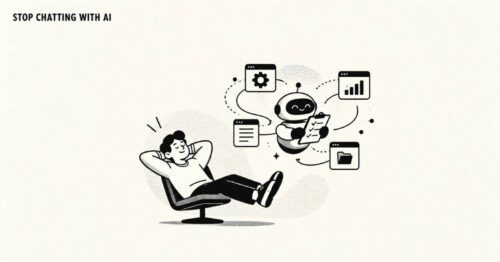
For the last few years, our relationship with artificial intelligence has been defined by the prompt. We treat the LLM as a sophisticated vending machine: you put in a request, and you get a result. If the result is wrong, you tweak the prompt and try again. This is the era of the single-turn interaction, and it is rapidly coming to an end.
The Shift Toward Agentic Workflows
The current trend in AI is not about larger models or more parameters. It is about agency. We are moving from a world of chatbots to a world of agentic ecosystems. In this new paradigm, the AI does not just generate text; it creates a plan, breaks that plan into discrete tasks, and executes those tasks using a suite of tools.
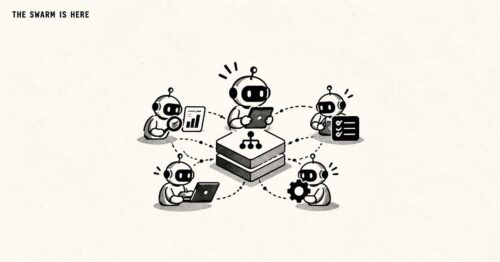
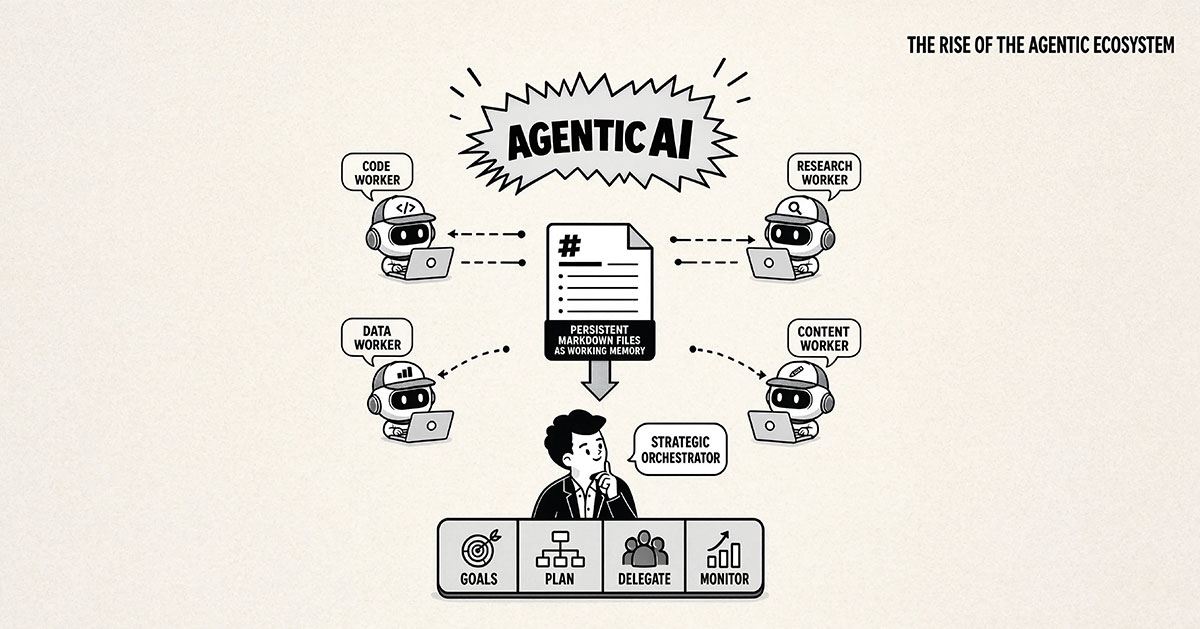
The most significant breakthrough recently has been the mainstreaming of cross-agent skills. Instead of one giant model trying to do everything, we are seeing a delegation pattern. A lead agent manages the project, a researcher agent gathers data, and a coder agent implements the solution. They communicate with each other, critique each other, and iterate until the goal is met.
Planning with Files: The New Working Memory
One of the most underrated shifts in 2026 is the move toward planning with files. Early agents tried to keep everything in a massive context window, which led to hallucinations and lost details. Modern agentic systems now treat the filesystem as their external brain.
By writing a plan to a markdown file and updating that file as they progress, agents gain a durable form of memory. This allows them to recover from errors, handle long-horizon tasks that take hours instead of seconds, and provide a transparent audit trail for the human user. You no longer have to guess what the AI is thinking; you can simply read the plan.md file in the workspace.
The Security Paradox of Agency
As AI agents gain the ability to execute code, edit files, and call APIs, the security landscape has shifted. We are no longer just worried about prompt injections that make a chatbot say something rude. We are now dealing with the risks of autonomous actions.
The 2026 security priorities have moved toward guardrails for agency. The goal is to create a sandbox where an agent has enough freedom to be useful but not enough to be dangerous. This involves fine-grained permission systems where the agent must request approval for high-risk actions. The tension between autonomy and safety is the defining technical challenge of the current year.
What This Means for the Professional
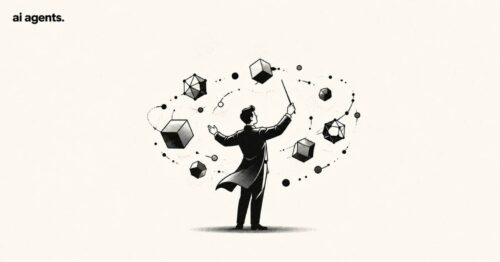
The role of the human is evolving from a writer of prompts to a manager of agents. The value is no longer in knowing the exact wording to get a specific output. The value is now in strategic orchestration. You are the architect who defines the goal, the reviewer who audits the agentic plan, and the final arbiter of quality.
Those who cling to the prompt-and-response loop will find themselves overwhelmed by the speed of agentic workflows. The future belongs to those who can design the ecosystem, set the constraints, and lead a team of digital specialists.